Skip to content

CategoryDocumentaries

Woodstock Film Festival: My So-Called Selfish Life

“I’m childfree and it’s fabulous.”

Marcia Drut-Davis

Women carry the burden of the many expectations society has for them. The biggest one: motherhood. If a woman in her childbearing years decides against having children, she’s considered selfish. In fact, if she makes any reproductive choices at all, including the use of contraceptives and birth control, voluntary hysterectomies or having an abortion, she will be criticized by someone who feels they have a say in the matter. Many women are seen as walking uteruses rather than individuals who have a lot to offer other than giving birth. And those who want children but can’t have them due to many factors, including infertility, socioeconomic inequality and forced sterilization, are often seen as some sort of failure because they couldn’t achieve the goal assigned to them by societal norms. Being childfree or childless can make women feel like outcasts. Or worse. Silenced. 

Childfree — won’t have children

Childless — can’t have children

Written, directed and produced by Therese Shechter, My So-Called Selfish Life gives a voice to the women out there who live their lives without birthing children, whether it was their choice to do so or not. It’s a profoundly important documentary about a subject that is often swept under the rug. Any childfree or childless woman, including myself, who has endured awkward and hurtful conversations with people in their lives about their situation  will feel not only validated but redeemed to hear so many women in similar situations. And for those who cast judgement on others about the idea of maternal regret, they may learn a thing or two about compassion. 

The documentary includes interviews with a variety of experts including doctors, authors and activists. These are bolstered with historical context and pop culture references. Almost every possible approach was taken making this a very thorough exploration on the subject matter. With that said, I wish the film had explored how social media platforms, including TikTok, are being used to openly discuss childfree living but it unfortunately does not.

I can see this documentary doing well through word-of-mouth recommendations, with childfree and childless women sharing it with others to encourage discussion and understanding.

My So-Called Selfish Life premiered at the 2021 Woodstock Film Festival. Learn more about the documentary on the official website.

Algren

“One of the greatest writers America ever produced.”

Nelson Algren gave a voice to the voiceless. The Detroit-born writer made his way to Chicago where he became fascinated with that city’s seedy underbelly. He got to know those whom the American dream was elusive and every day meant trying to survive some battle. Algren got to know and eventually wrote about junkies, drug dealers, pimps, hookers, gamblers, drunks, etc. He became the poet for the disenfranchised with novels like The Neon Wilderness and A Walk on the Wildside. He’s best known for his 1949 novel The Man With the Golden Arm which was the first to win a National Book Award for Fiction. It went on to be adapted in 1955 by director Otto Preminger and stars Frank Sinatra, Kim Novak and Eleanor Parker. Even with that acclaim, his novels were poorly packaged and marketed, portraying Algren as a master of pulp rather than a literary genius.

“Nelson Algren told the stories of the people who came out of WWII yet who could never achieve the American Dream. Those people are still with us, still being kept down by a brutal and unfair system. It is my hope that by telling Algren’s story, that the next generation will be similarly inspired to focus on the people at the bottom, those whose tales still need to be told.”

Michael Caplan

Director Michael Caplan’s documentary conveys the importance of Nelson Algren’s life and literary contributions through interviews with the people who admired him best. Talking heads include artists, professors, writers, booksellers, film directors and friends. Notable figures include Billy Corgan and William Friedkin. It’s clear that these interviewees admired Algren for his genius and his singular personality. There is also plenty of archival footage and photos, as well as narration of what I believe is Algren’s memoirs. The documentary explores Algren’s journey from journalism to fiction writing, his torrid affair with writer Simone de Beauvoir, his relationship with Chicago and much more. The documentary can be hokey at times. Although I wished it was a bit more polished, I was transfixed by Algren’s story. 

Algren is a compelling documentary about a literary genius who became a voice for America’s disenfranchised.

Algren opens in theaters October 1st. Visit the First Run Features website for more details.

TIFF: Oscar Peterson: Black + White

Director Barry Avirch’s Oscar Peterson: Black + White is a tribute to the legendary Canadian jazz pianist. The story of Oscar Peterson is told through archival photos, performances and interview footage along with present day interviews with musicians, historians, as well as Peterson’s wife Kelly. Talking heads include Billy Joel, Quincy Jones, Jon Batiste and more.

Avrich refers to the film as a “docuconcert” because throughout jazz musicians perform Peterson’s best known work, including Hymn to Freedom and Orange Colored Sky. The musical arrangements match the trio or quartet structure Peterson played from and the piano used is Peterson’s own. The documentary chronicles Peterson’s rise to fame, his extraordinary skill, his mentorship of other musicians, his devotion to his home country of Canada and personal struggles he faced including failed marriages and racism.

While Avrich’s film is informative it’s also heavily biased. At times the film felt like an advertisement more than a well-rounded documentary. With that said, I really enjoy Avrich’s documentaries, particularly Prosecuting Evil and Blurred Lines. There is so much detail and so much research that goes into his documentaries and it truly shows. The documentary-concert hybrid style adds to the enjoyment of the film.

Oscar Peterson: Black + White had its world premiere at the 2021 Toronto International Film Festival.

TIFF: Julia

Julia Child was a revolutionary. In a time when home cooks were looking for anything canned, boxed or frozen in order to ease the burden of housewives, Julia Child came on the air touting French cuisine with all its complexities. But she did so in a way that taught folks on the other side of the television screen how to  step up their game in the kitchen with materials they already had at home and food they could get at their grocery store. Child started a movement that made television cooking something that people watched for both entertainment and pleasure. She also sparked a culinary renaissance bringing back the fine art of cooking to the US.

Directed by Julie Cohen and Betsy West, best known for their documentary RBG, Julia is a celebration of one of the greatest and most important icons of the 20th century. The doc follows Julia’s story from her early days in Pasadena, her secretarial work abroad during WWII, her marriage to her beloved Paul Child, her culinary education in France, her first cookbook, her work in Boston for PBS and her ever enduring fame that made her a national sensation. Having grown up in the Boston area, I watched Julia Child cook on my local PBS station WGBH. And over the years since her death in 2004 and the many celebrations during her centennial year in 2012, I knew Julia Child was special. But Cohen and West’s documentary really drove that home.

The documentary boasts amazing food photography woven in with archival footage of Julia Child in the kitchen, personal photographs and letters, audio recordings of Child talking about her life, as well as interviews. Talking heads include celebrity chefs she directly influenced, family members, friends and many others. Foodies will recognize some big names in the cooking world including Ina Garten, Sara Moulton, Jacques Pepin, Ruth Reichl, Jose Andres and many more. Cohen and West do a fantastic job adding context to Julia’s story while also conveying her spirit, her warmth, her tenacity and her willingness to learn and evolve. I laughed, I cried and afterwards I was starving!

Julia is part of the 2021 Toronto International Film Festival’s TIFF Docs slate. Visit the Sony Pictures Classics website for more details about the film.

The Place That Makes Us

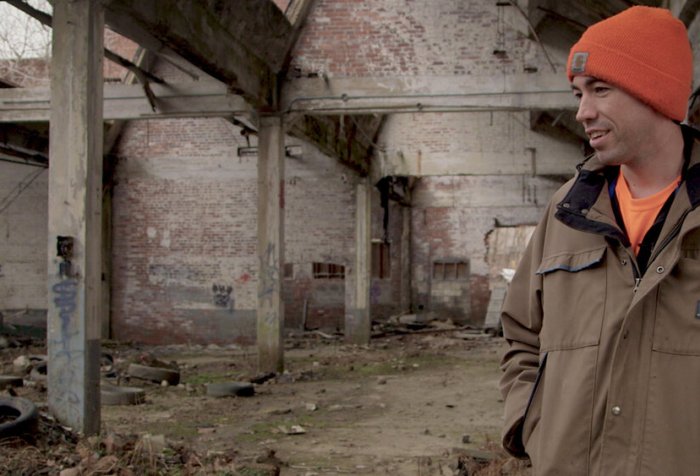
Youngstown, Ohio is a steel mill city on the Rust Belt that has seen a major decline over the past few decades. The mills closed and the subsequent loss of jobs sent its residents fleeing. For those left behind, they were faced with a crumbling infrastructure, an uptick in violence and crime and hundreds of vacant homes. 

Directed by Karla Murthy, The Place That Makes Us spotlights a group of Youngstown residents seeking to transform their hometown. Filmed over the course of three years, the documentary follows members of the city council and organizers of YNDC (Youngstown Neighborhood Development Committee) as they work to rebuild Youngstown’s abandoned homes and make plans to boost their community. While the documentary is specifically about Youngstown, it could really be about any shrinking city or town in America. What the film does really well is drive home the message that any community can be transformed but it takes its residents, not outsiders, to really enact that change.

The Place That Makes Us premieres today on the WORLD channel series America Reframed. Visit the official website for more information.

JustWatch.com