Skip to content

CategoryFilm Reviews

Sundance: Pleasure

The idea of making money from pleasure is an intoxicating one. Bella Cherry (Sofia Kappel), has traveled from her home in Sweden to Los Angeles, to do just that. She aspires to break into the lucrative porn industry. Newcomers are embraced quickly with their first porn shoot which is packaged and sold as an enticing first experience video. But once that cherry has been popped, it’s more difficult to climb the ranks. Bella has the looks, the body but soon discovers that’s not enough. She’s timid, awkward and reluctant to do more advanced techniques. But she’s also got drive. She wants he top talent agent, the lucrative shoots, the best hair and makeup and the chance to climb to the top. Along the way she discovers how abusive her work really is and in order to make it she needs to not only take that abuse but to give it as well.

Directed by Ninja Thyberg, Pleasure is an expansion of her short film by the same name, Pleasure (2013), which premiered at Cannes and also screened at the Sundance Film Festival. Every industry is toxic in one way or another but the porn industry has a cycle of abuse that can be particularly damaging. Thyberg adeptly explores this in her film and casts a critical eye on how the industry treats young women. Kappel offers the viewer a sense of unease that fits with her character.

Pleasure is rooted in realism. There is plenty of nudity and borderline pornographic scenes. Many of the actors are actually porn stars and real porn genres and brand names are used throughout.

I recommend Rashida Jones’ Hot Girls Wanted, a breakout documentary that premiered at the 2015 Sundance Film Festival and is available to watch on Netflix. Pleasure is almost like a fictionalized version of Jones’ film.

Pleasure premiered at the virtual 2021 Sundance Film Festival as part of their World Cinema Dramatic Competition.

Sundance: The Dog Who Wouldn’t Be Quiet/El perro que no calla

This gentle poetic film follows the story of Sebastian (Daniel Katz), a young graphic designer making his way through life. His sweet dog misses him when he’s gone. Her cries annoy the neighbors Sebastian’s employers don’t want her around either. As time passes, Sebastian mourns the death of his dog, struggles to find steady work and becomes a new father. Then there is a new pandemic which causes humans to pass out if they stand up straight. In order to survive humans must crouch under 4 feet or wear an expensive bubble over their heads.

Directed by Ana Katz, The Dog Who Wouldn’t Be Quiet/El perro que no calla is a somber film that covers a lot of ground in just over an hour. It’s shot in black and white and the lead actor Katz offers a beautifully subdued performance. However, despite its best intentions the film falls flat offering the viewer little by way of substance. For dog lovers, the early scenes are really tough to watch. A couple poignant scenes are told through hand-drawn illustrations. I wish this would have been implemented more. I also had hoped that the unusual pandemic was a more substantial part of the film and would be explained. I couldn’t quite connect with the story or the main character expect for his genuine connection with his dog.

The Dog Who Wouldn’t Be Quiet/El perro que no calla premiered at the virtual 2021 Sundance Film Festival as part of the World Cinema Dramatic Competition.

Sundance: Prime Time

Set in Poland on New Year’s Eve 1999, Prime Time stars Bartosz Bielenia as Sebastian, a troubled young man who breaks into a major Polish television studio. He takes a security guard and on air hostess hostage and demands that he be broadcast live to the nation. With gun in hand and a note in his pocket, he  battles with the television producers and the hostage negotiators who will do anything to prevent him from reading his message. The situation gets more volatile as the night progresses, leaving Sebastian in a bind.

Directed by Jakub PiÄ…tek, Prime Time seems to have an important message to offer but ultimately fails to deliver. It eschews the conventional approach to a hostage thriller. Tension is palpable yet muted and the film moves along at a steady rather than frenzied pace. Bartosz Bielenia, who starred in the excellent Polish drama Corpus Christi, is magnificent as the disturbed Sebastian who is anything but a villain. However, the viewer never really gets to know his character. We’re left wondering about his motivation. Ultimately he is a relatable character whom we empathize with but the impetus for his actions are unclear. It leaves the viewer with more questions than answers.

Prime Time had its world premiere at the virtual 2021 Sundance Film Festival as part of the World Cinema Dramatic Competition.
Sundance: CODA

What a way to kick off my very first Sundance Film Festival! The first feature film I had the pleasure to see, CODA, is a new favorite and one I’ll be recommending for months to come.

Set in Gloucester, Massachusetts, CODA (an acronym for Children of Deaf Adults) stars Emilia Jones as Ruby, the only hearing member of a deaf family. Her father Frank (Troy Kotsur) manages a struggling fishing business which is bolstered by the help of his wife Jackie (Marlee Matlin), his deaf son Leo (Daniel Durant) and his hearing daughter. The family depends on Ruby to interpret on their behalf, causing her to bear more burden on the high school teenager. But Ruby is on her own journey.  Ruby joins the high school choir where she must overcome her shyness, accept the tough-love tutoring of her singing coach Bernardo (Eugenio Derbez) and expose her vulnerability to her crush and duet partner Miles (Ferdia Walsh-Peelo). Can Ruby find her voice or will she have to sacrifice it to help her family survive their current hardship?

Director Siân Heder absolutely delivers with this feel-good drama that offers moments of joy, sadness and hope. CODA is funny and charming and sends its viewers on a rollercoaster ride of emotions. It’s effective not only as a coming-of-age story but an exploration of a unique family dynamic. Heder cast deaf actors Matlin, Kotsur, and Durant in the roles of the deaf family members. Potential caricature is avoided with authentic and multi-dimensional characters performed by  talented actors. Representation matters and Heder clearly demonstrates that with this thoughtfully crafted film. Another way CODA is effective is in evoking empathy for the plight of the characters and not for their disability. These are fiercely independent individuals who face a battle to thrive in a society of people who do not or chose not to understand. It’s beautiful to see the way they support each other especially as their youngest, who they’ve depended on for so long, is ready to spread her wings and fly.

CODA premiered at the 2021 Sundance Film Festival.

AFI Fest: Wander Darkly

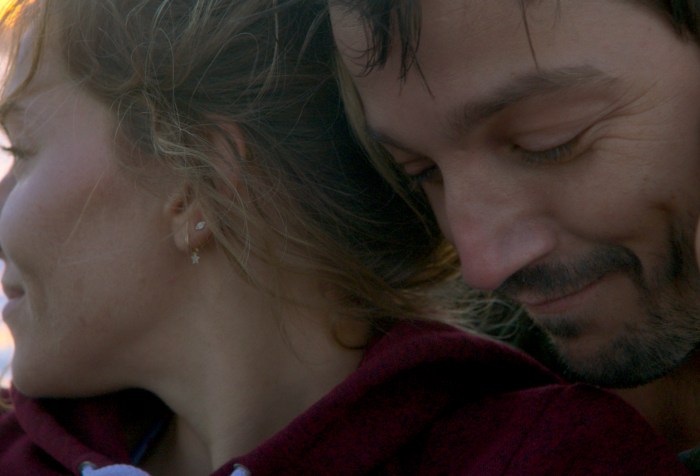
Adrienne (Sienna Miller) and Mateo (Diego Luna) are at an impasse in their relationship. The couple have settled down and had a baby but have ultimately grown to resent each other. After a tense interaction at a party,  Adrienne and Mateo are involved in a horrific car accident that inevitably changes their relationship forever.

It’s difficult to talk about Wander Darkly without giving away key elements of the plot that make the film so mesmerizing. Directed by Tara Miele, who was inspired by her own trauma to tell the story of Adrienne and Mateo, Wander Darkly is a gripping drama about trauma, love, gratitude and Miele calls “everyday magic.” The way film pivots back and forth from reality to memory, often combining the two, is astonishingly good. Miller and Luna breathe life into their characters in such a profound way. Wander Darkly is riveting and has easily become one of my favorite films of the year.

Wander Darkly was screened as part of the 2020 virtual AFI Fest. It is distributed by Lionsgate.

JustWatch.com